Never cap the sessions
Sessions 永遠唔封頂
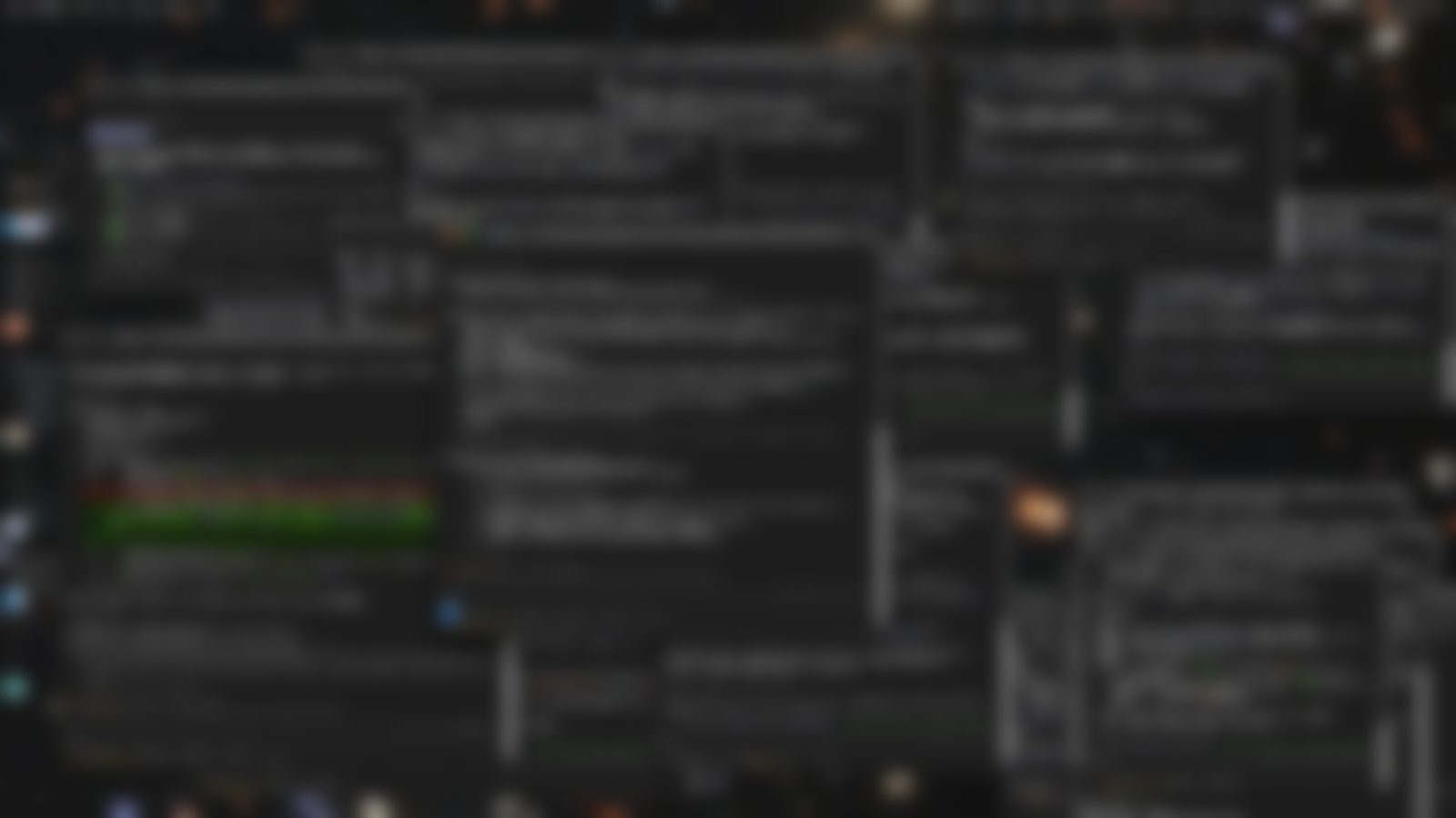
People see this screenshot and ask how I keep track of it all. Honest answer: I don't track the windows. I track the board.
I am one person. I don't write most of the code anymore. I decide what gets built, I correct course, I approve what ships. The sessions do the rest — in parallel, all the time. In the last 30 days my coding agent alone ran 2,181 sessions. Not 2,181 prompts. Sessions.
“Running that many AIs must be hard”
It is. I said exactly that today, looking at this screen. Every session eventually comes back with a question, a decision, a “your turn.” A dozen sessions means a dozen queues, all of them pointing at one human.
But here is the thing nobody gets: the hard part is not the number of sessions. The hard part would be shipping all of this with three.
Active sessions are never capped. That is the source of my productivity.
A cap sounds like discipline. It is not. A cap is a queue of work that hasn't started, ideas going stale while they wait for a slot. My bottleneck was never ideas, and it was never code. It was one pair of hands. The sessions removed the hands from the equation. Capping them puts the hands back.
The board is the single pane
What makes unlimited parallel manageable is not a bigger screen. It is a contract. Every session I spawn works in its own worktree and ends with exactly one of two lines:
AGENT-BOARD: DONE — what shipped, and how it was verified.
AGENT-BOARD: BLOCKED — what is missing, and what it needs from me.
The agent board collects those reports into one pane. I read reports, not terminals. The wall of windows sits behind the board, and I almost never look at it directly — except on evenings like this one, when I screenshot it because, honestly, it looks iconic.
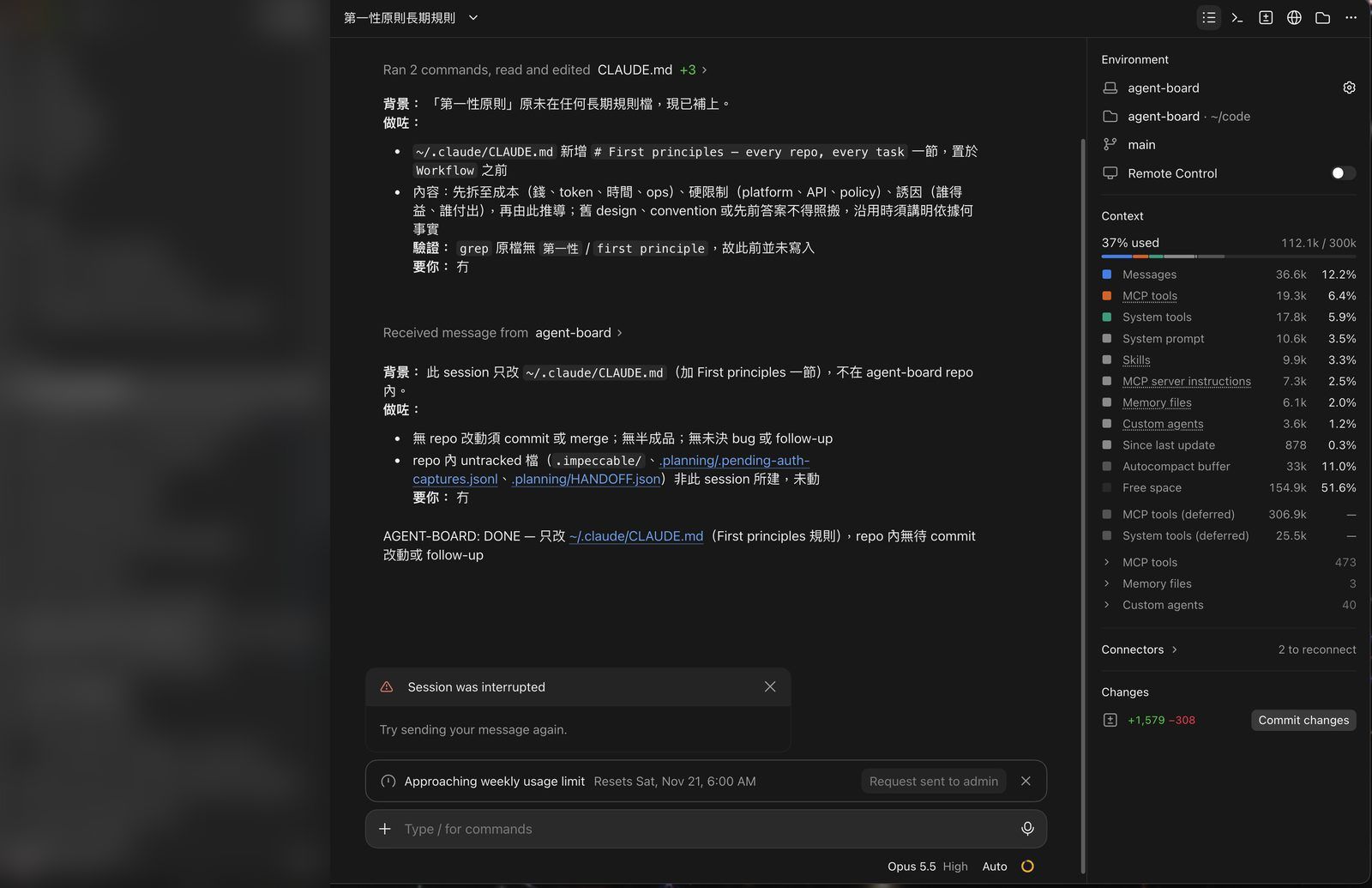
The machine pays for it. Good.
None of this is free, and the Activity Monitor does not lie about it:
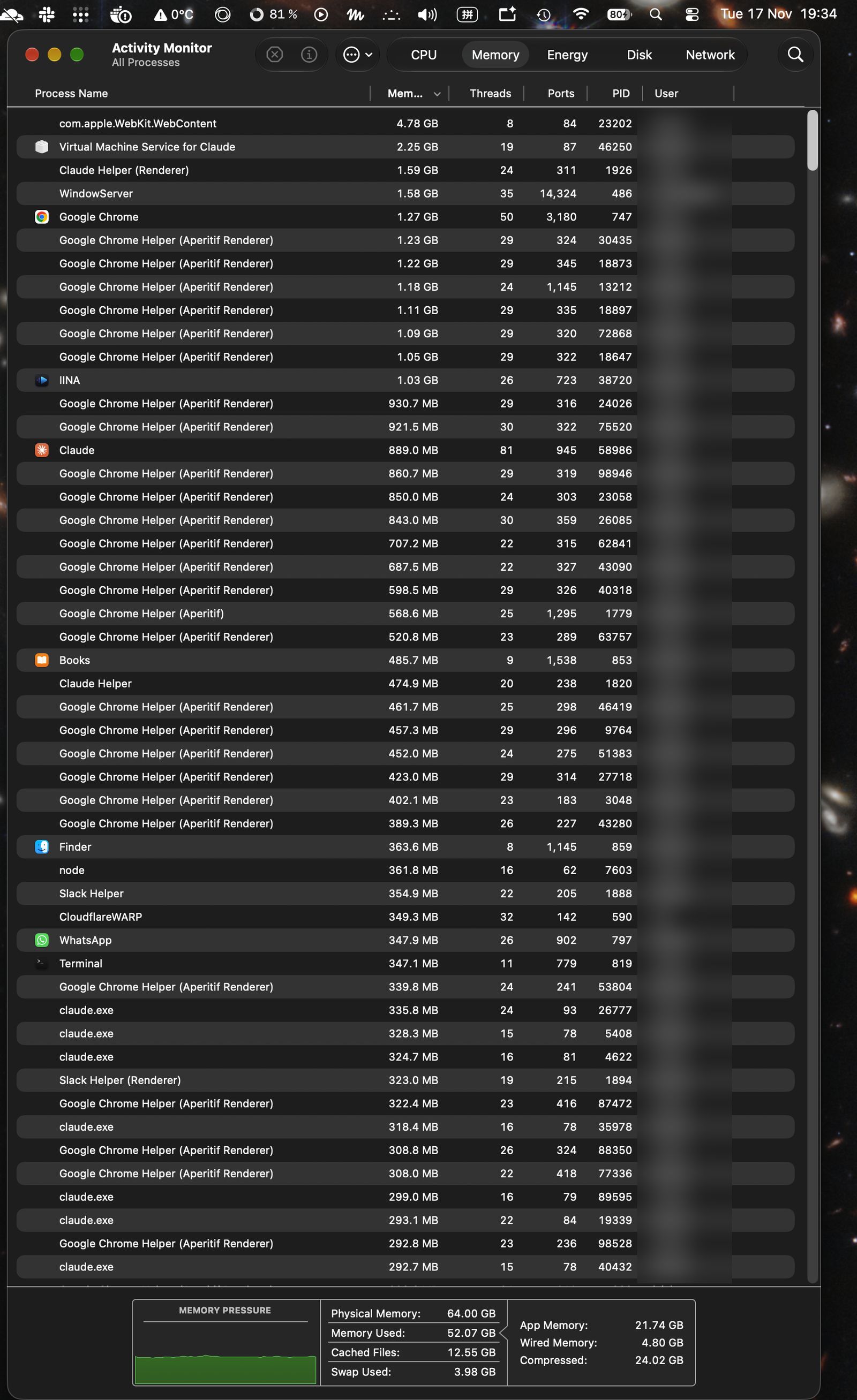
People look at numbers like that and suggest closing some sessions to “give the machine a break.” That is solving the wrong problem. RAM is a hardware problem — the fix is more RAM. Quota is a plan problem — the fix is a bigger plan. Sessions are the product. You do not fix a factory by switching off machines.
The rule going forward
So the wall stays. It will probably get bigger. One architect, one board, as many sessions as the work needs.
Cap the meetings. Cap the context switches. Never cap the sessions.
New rule, starting with this post: every post on this blog carries at least one photo. Screenshots are the receipts.
Screenshots are from my own Mac, November 17, 2026. Session count from my coding agent's 30-day statistics.
人哋見到呢張截圖,就問我點樣跟得晒。老實答:我唔係跟 window,我跟嘅係 board。
我得一個人。我已經唔再寫大部分 code。我決定起咩、我修正方向、我批准出貨。Sessions 做埋其餘嘅嘢 — 並行咁做,冇停過。過去 30 日,淨係我個 coding agent 就行咗 2,181 個 sessions。唔係 2,181 個 prompts,係 sessions。
「同時行咁多 AI 一定好難」
係難。我今日望住呢個畫面,講嘅正正就係呢句。每個 session 到最後都會返嚟,帶住一個問題、一個決定、一句「到你啦」。十幾個 sessions,就係十幾條 queue,全部指向同一個人。
但冇人明嘅係:難嘅唔係 sessions 嘅數量。難嘅係要用三個 sessions,出晒呢度全部貨。
Active sessions 永遠唔封頂。呢個就係我生產力嘅來源。
封頂聽落好似紀律,其實唔係。封頂只係一條未開工嘅 queue,啲諗法等緊個位,等到過期。我嘅 bottleneck 從來唔係諗法,亦唔係 code,係得一對手。Sessions 將雙手移出咗成條方程式。封頂佢哋,就係將雙手放返入去。
Board 就係嗰塊總覽板
等無限並行變得管理得到嘅,唔係一塊更大嘅螢幕,係一份合約。我開嘅每個 session 都喺自己嘅 worktree 入面做嘢,最後只會交返兩句說話其中一句:
AGENT-BOARD: DONE — 出咗咩貨,點樣驗證。
AGENT-BOARD: BLOCKED — 爭啲咩,需要我畀啲咩。
Agent board 將呢啲報告收埋入同一塊板。我睇報告,唔睇 terminal。嗰牆 window 喺 board 後面,我幾乎唔會直接望佢 — 除咗好似今晚咁,截低佢,因為老實講,個畫面真係好 iconic。
部機要埋單。好,應該嘅。
呢一切都唔係免費,Activity Monitor 唔會講大話:
人哋見到啲咁嘅數字,就會提議閂咗啲 sessions,等部機「抖下」。咁係解決錯咗個問題。RAM 係硬件問題 — 解法係加 RAM。Quota 係 plan 問題 — 解法係升 plan。Sessions 先係產品。你唔會閂工廠啲機嚟修間工廠。
以後嘅規則
所以嗰牆會留低。好可能仲會越嚟越大。一個 architect、一塊 board,工作需要幾多 sessions 就開幾多。
Meetings 可以封頂。Context switches 可以封頂。Sessions,永遠唔封頂。
呢篇開始,新規則:呢個 blog 每篇文最少有一張相。截圖就係收據。
截圖嚟自我部 Mac,2026 年 11 月 17 號。Session 數字嚟自我 coding agent 嘅 30 日統計。